Incense Guide

The Complete Incense Sticks Guide

Discover incense types, traditional uses, fragrance selection, storage and safe burning practices.

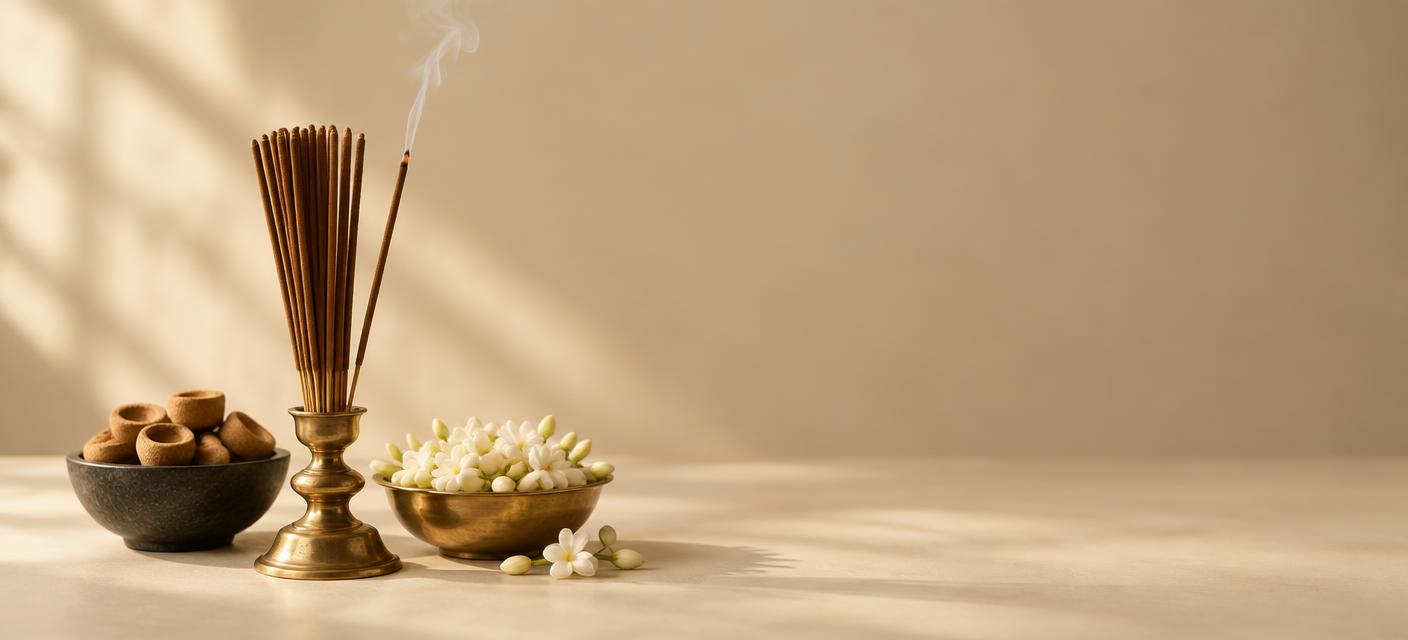
Incense sticks burning in a traditional brass holder beside dhoop cups and a brass bowl of jasmine blossoms

Introduction to Incense Sticks

Incense sticks are one of the simplest ways to bring fragrance into a space: a fragrant material is lit at the tip, the flame is allowed to go out, and the incense then smoulders, releasing its scent slowly.

For centuries incense has been burned as part of prayer, worship and meditation, and it remains a familiar part of daily life in many Indian homes, where it marks the morning pooja, welcomes guests and simply makes a room smell pleasant. Alongside that traditional role it is now also used to set an atmosphere for reading, resting or working.

This guide explains the main types of incense, how and why it is used, how to burn it safely, and how to choose and store a pack you will enjoy.

History of Incense

The burning of fragrant resins, woods and herbs stretches back through many early civilisations. In ancient Egypt aromatic materials were used in temples and ceremonies; in India they became woven into daily worship and ritual; and in China incense was burned in temples and in refined practices of its own. From these centres, aromatic goods travelled along trade routes to markets far from where they were gathered.

That history is still present in everyday practice. Incense continues to be lit in temples and homes, and it is also used in contemporary settings such as yoga studios, cafés and living rooms, where the purpose may be devotional, social or simply pleasant.

An interesting fact: the word “incense” is associated with the Latin word incendere, meaning “to burn.”

Types of Incense

Incense is usually grouped by the materials and the form it takes. The descriptions below are general, because recipes and methods differ from maker to maker; the printed packaging tells you what a specific pack contains.

Traditional Masala Incense

Masala incense is made by coating a core, often a bamboo stick, with a fragrant paste. The recipe of that paste, the materials used and the way the sticks are dried differ from one maker to another, so the printed packaging is the most reliable guide to what a particular pack contains.

Charcoal-Based Incense

Charcoal-based incense includes charcoal in its composition. This helps the stick burn steadily and often produces a thicker, more visible smoke, which some people prefer for a longer puja or when they want the fragrance to spread through a larger room.

Herbal Incense

Herbal incense is prepared with plant materials such as dried herbs, barks, roots or woods. A plant-based recipe does not automatically mean a product is chemical-free, and it does not mean it suits sensitive skin. Ingredient lists differ widely between packs, so check the label and always burn incense in a ventilated room.

Floral Incense

Floral incense is built around the smell of flowers, with notes such as rose, jasmine, mallige or champa. That floral character may come from essential oils or from blended fragrance materials, and the packaging usually gives the best indication of how a pack has been made.

Resin-Based Incense

Resin-based incense uses aromatic plant resins, materials that have been burned since ancient times. Resins tend to give a warm, balsamic and long-lasting aroma, which is why they appear in so many temple and ceremonial traditions.

Dhoop Incense

Dhoop is usually a fragrant mass formed without a bamboo core, shaped into thick sticks, cones or cups. Because there is no bamboo to burn, dhoop often gives a denser aroma and is commonly used for a short, focused pooja or to fill a room with fragrance.

Traditional Uses and Potential Benefits

The reasons people burn incense are mostly traditional, cultural or personal. They are described here as ways incense is used, not as proven medical or psychological effects. Incense smoke can affect indoor air quality, so burn it in a ventilated room.

Prayer, pooja and worship

In many households incense is part of daily puja, lit as an offering and to mark the beginning of prayer. Its role here belongs to faith and custom rather than to any measured effect.

Meditation and yoga

Some people use a familiar fragrance to signal the start of a sitting, so the room feels settled and the mind turns inward. This is a personal routine, and what helps one person may do nothing for another.

Relaxation and ambience

A pleasant smell can make a room feel more welcoming, and many people find that a soft fragrance helps them unwind in the evening. How strongly it works depends on the person, the room and the product.

Focus and concentration

A steady, familiar scent is sometimes used as part of a study or work ritual. It is a matter of personal habit and preference, not a proven improvement in concentration.

Fragrance and home atmosphere

The plainest reason people burn incense is simply to make a home smell nice, whether before guests arrive or to refresh a space after cooking.

Traditional cleansing rituals

Certain traditions describe smoke as a way of cleansing a space. These are cultural beliefs handed down through practice; they are not statements about the air you breathe.

How to Use Incense Sticks

Burning an incense stick takes only a moment. Follow the directions printed on your product where they differ from these general steps.

  1. 1Choose a fragrance suited to the occasion.
  2. 2Place a suitable heat-resistant incense holder on a stable, non-flammable surface.
  3. 3Light the tip carefully.
  4. 4Follow the product packaging instructions for extinguishing the flame and allowing the incense to smoulder.
  5. 5Place the incense securely in its holder, away from flammable materials.
  6. 6Never leave burning incense unattended.

Common Uses

Most incense is burned for one of a handful of everyday reasons. Some of these belong to belief and custom rather than to measurable effects.

  • Daily pooja and worship
  • Meditation and yoga
  • Creating a pleasant home atmosphere
  • Traditional cultural and cleansing rituals
  • Personal fragrance preferences

Choosing the Right Incense

A few simple considerations make it easier to find a pack that suits you. Strength and character vary between products, so check the pack rather than assuming how a fragrance will behave.

The intended occasion

A short daily puja, an evening of quiet reading and hosting guests each call for a different strength and character of fragrance.

Preferred fragrance family

Floral, woody, resinous or herbal notes suit different tastes and rooms, so it helps to know which direction you enjoy.

Mild versus strong fragrance

Smaller or closed rooms usually suit a lighter product, while larger open areas can carry a stronger one.

Product format and package information

Sticks, dhoop, cones and cups differ in how they burn and how much smoke they give off, and the pack tells you what you are buying.

Burning instructions printed on the product

Follow the directions on the pack, because they are written for that particular product.

Packaging and storage requirements

Check how the pack should be kept so the fragrance stays as it was when you bought it.

Storage and Care

Incense keeps best when it is treated as the fragrant material it is. A little care helps a pack smell the same at the end as it did at the beginning.

  • Store incense in a cool, dry place.
  • Keep it protected from moisture.
  • Keep fragrances separate where practical to preserve their individual scents.
  • Follow the storage directions printed on the packaging.

An airtight container is worth using only where it suits the product and the manufacturer's instructions; for some packs the original wrapping is the better choice.

Environmental Considerations

The environmental impact of incense depends on several things at once: what goes into the product, how those materials are sourced, how the product is made and how it is packaged. A natural recipe does not automatically mean a product is harmless, chemical-free or environmentally friendly, and a product described as natural may still involve energy, transport and packaging.

Where claims such as biodegradable, sustainably sourced, plastic-reduced or chemical-free matter to you, look for the substantiation behind them on the packaging or from the seller rather than assuming they apply.

Interesting Facts About Incense

Ancient incense traditions

Incense has been burned across many early civilisations, including in ancient Egypt, India and China, where fragrant resins, woods and herbs were used in temples, ceremonies and daily life.

Kodo, the Japanese art of incense

In Japan, Kodo is the traditional practice of appreciating incense, in which participants smell prepared aromatic woods and discuss what they notice. It treats fragrance as a quiet, attentive art rather than simply a way of scenting a room.

The trade value of aromatic materials

Aromatic resins, barks and woods were once precious trading goods. Long-distance routes carried them across Asia and into the markets of the ancient world, and at times they were valued as highly as metals.

A symbolic role in spiritual practice

In many traditions the rising smoke stands for a prayer or intention moving upward, which is why incense appears so often in worship and remembrance.

Frequently Asked Questions

Conclusion

Incense is burned across many cultural traditions and in ordinary everyday settings, for fragrance, for atmosphere and as part of practice. Formats differ, fragrances differ, and people's preferences differ, so it is worth trying a few and keeping what suits your home.

Explore the world of incense with SHRESHT PURE AGARBATTI. Discover different formats and fragrances, and always follow the instructions on the product packaging for safe use.

Talk to us

Product & Business Enquiries

Have a question about a product, pack format or a business requirement? Message SHRESHT PURE AGARBATTI on WhatsApp.